


Preventive Health Habits That Build a Stronger Future

Most serious health problems do not start overnight. High blood pressure, insulin resistance, poor sleep, chronic stress, and weight gain often build for years before they become a diagnosis.
That is why prevention matters. Perfection is a poor target. A better goal is steady action that lowers risk over time.
Preventive care includes annual exams and screenings, but it also includes what happens between appointments. Food choices. Daily movement. Sleep. Stress control. Blood pressure checks. Vaccines. Lab work when needed. These choices add up.
This article is for general education only. It does not replace medical advice from a licensed clinician.

Prevention works because risk builds quietly
The Centers for Disease Control and Prevention reports that 6 in 10 adults in the United States live with at least one chronic disease, and 4 in 10 live with two or more. Conditions such as heart disease, diabetes, cancer, and chronic lung disease drive much of the country’s illness, disability, and health care spending.
Many of these conditions share the same risk factors:
High blood pressure
High blood sugar
High cholesterol
Tobacco use
Poor diet quality
Low physical activity
Poor sleep
Chronic stress
Excess alcohol use
The key point is simple. These risks are measurable. They are also often changeable.
That is where preventative health deserves more attention. Waiting for symptoms can mean waiting too long. High blood pressure often has no warning signs. Prediabetes can go unnoticed. Early kidney disease may not cause pain. High cholesterol does not announce itself.
Regular monitoring helps catch problems early, while daily habits help reduce the chance that those problems grow.
The strongest prevention plans are not extreme. They are repeatable. A 20-minute walk after dinner may do more good over a year than an intense workout plan that lasts ten days. A consistent bedtime may matter more than one perfect weekend of rest. A simple meal pattern with more fiber, protein, and plants can support better numbers without requiring a strict diet.
Prevention succeeds when it fits real life.
Nutrition is a daily form of risk management
Food affects blood pressure, cholesterol, blood sugar, gut health, energy, and inflammation. That makes nutrition one of the most practical prevention tools available.
Research has repeatedly linked diets rich in vegetables, fruits, whole grains, beans, nuts, fish, and unsaturated fats with lower risk of heart disease and type 2 diabetes. The Mediterranean and DASH eating patterns are two well-studied examples. DASH, which stands for Dietary Approaches to Stop Hypertension, was designed to help lower blood pressure.
A prevention-focused plate does not need to be complicated.
Aim for a pattern like this most of the time:
Half the plate filled with vegetables or fruit
One quarter with protein, such as fish, chicken, eggs, tofu, beans, or Greek yogurt
One quarter with high-fiber carbohydrates, such as oats, brown rice, potatoes, beans, or whole grain bread
A source of healthy fat, such as olive oil, avocado, nuts, or seeds
Fiber deserves special attention. Higher fiber intake supports cholesterol control, steadier blood sugar, better digestion, and fullness. Many adults in the U.S. fall short of recommended fiber intake. Adding beans, lentils, berries, oats, chia seeds, and vegetables can close that gap.
Protein also matters, especially for busy days. It supports muscle, helps control hunger, and can reduce the urge to graze on low-nutrient snacks. For families, simple options work best: hard-boiled eggs, tuna packets, hummus, cottage cheese, rotisserie chicken, edamame, or bean-based soups.
Small upgrades count.
Instead of | Try more often |
Sugary cereal | Oatmeal with berries and nuts |
Chips as the default snack | Greek yogurt, fruit, or nuts |
Soda with meals | Water, sparkling water, or unsweetened tea |
White bread only | Whole grain bread with at least 3 grams of fiber |
Fast food by default | Batch-cooked bowls, soup, tacos, or sheet-pan meals |
The goal is not a perfect diet. The goal is a pattern that supports better health markers over time.
Exercise protects more than weight
Movement is often framed as a way to burn calories. That misses the bigger value.
Physical activity helps lower blood pressure, improve insulin sensitivity, raise cardiovascular fitness, support mental health, preserve muscle, and reduce fall risk with age. The U.S. Physical Activity Guidelines recommend at least 150 minutes of moderate-intensity aerobic activity each week, plus muscle-strengthening activities on two or more days.
That can sound like a lot. It becomes more realistic when broken down.
Try one of these weekly patterns:
30 minutes of brisk walking, five days a week
15 minutes in the morning and 15 minutes after dinner, five days a week
Three 40-minute walks plus two short strength sessions
A weekend hike, two weekday walks, and two bodyweight workouts
Strength training matters because muscle is protective. It supports metabolism, balance, joint health, and independence later in life. It also helps with blood sugar control because muscle tissue uses glucose.
A basic strength routine can include:
Squats or sit-to-stands
Wall pushups or regular pushups
Rows with a resistance band
Step-ups
Hip bridges
Farmer carries with grocery bags or dumbbells
No gym is required. Consistency matters more than equipment.
The Diabetes Prevention Program, a major clinical study, showed the power of lifestyle change. Among adults at high risk for type 2 diabetes, lifestyle changes that included weight loss, healthier eating, and physical activity reduced diabetes risk more than medication during the study period. The effect was especially strong in older adults.
That finding still matters. Daily movement is not just fitness. It is disease prevention, healthy habits, and long-term function working together.

Sleep and stress are not optional health habits
Sleep is when the body repairs, regulates hormones, supports memory, and restores the nervous system. Adults generally need at least 7 hours of sleep per night, according to the CDC and sleep medicine groups.
Short sleep is linked with higher risk of obesity, type 2 diabetes, high blood pressure, heart disease, depression, and accidents. Poor sleep also makes other habits harder. A tired brain craves quick energy. Workouts feel harder. Patience drops. Stress feels bigger.
A prevention-focused sleep routine does not need to be elaborate.
Start with these basics:
Keep a steady wake time, including weekends when possible
Get morning light within the first hour of waking
Cut caffeine after lunch if sleep is poor
Keep the bedroom cool, dark, and quiet
Put screens away 30 to 60 minutes before bed
Avoid heavy meals and alcohol close to bedtime
Stress deserves equal attention. Short-term stress is normal. Chronic stress is different. It can raise blood pressure, disrupt sleep, increase muscle tension, and push people toward coping habits that hurt health over time.
Stress management does not require a long meditation session. It can be built into the day.
Try:
Five slow breaths before checking messages
A 10-minute walk after a hard conversation
A written list of the next three tasks, instead of holding everything in memory
A set bedtime alarm, not just a wake-up alarm
A regular check-in with a therapist, coach, support group, or trusted friend
The body responds to repeated signals. If every day sends the message that there is no time to recover, health pays the price. Recovery is prevention.

Regular monitoring catches problems before they grow
Annual exams and screenings are not the whole story, but they matter. They create a baseline. They also help catch silent problems.
Primary care visits may include blood pressure checks, weight trends, medication review, vaccine updates, mental health screening, and lab work when appropriate. Depending on age, sex, history, and risk level, clinicians may recommend screenings for cholesterol, diabetes, certain cancers, osteoporosis, or other conditions.
The U.S. Preventive Services Task Force publishes evidence-based screening recommendations. These guidelines help clinicians decide which screenings are useful for specific groups. Not every test is needed for every person. The right test at the right time can save lives. Too much testing can cause stress and unnecessary follow-up.
A practical prevention plan includes knowing a few key numbers:
Blood pressure
Fasting glucose or A1C, if recommended
Cholesterol levels
Waist circumference or weight trend
Resting heart rate, if useful
Vaccination status
Family history of major conditions
Blood pressure is a good example. The American Heart Association defines normal blood pressure as below 120/80 mm Hg. Many adults do not know their current reading. Home blood pressure cuffs can help, especially for people with risk factors or past elevated readings. A clinician can explain how often to check and what numbers need follow-up.
Vaccines are another prevention tool. Flu, COVID-19, shingles, pneumococcal, HPV, hepatitis, and tetanus vaccines may be recommended based on age and risk. Vaccination reduces the chance of severe illness and helps protect people who are more vulnerable.
Health monitoring should not create fear. It should create clarity.
Prevention works best when habits are tied to real life
People often fail at health routines because the plan is too big, too vague, or too separate from daily life. Strong prevention plans are smaller and more specific.
Use habit pairing. Attach the new behavior to something that already happens.
Examples:
Take medication after brushing teeth
Walk for 10 minutes after lunch
Prep tomorrow’s breakfast while cleaning up dinner
Check blood pressure every Sunday morning
Stretch while coffee brews
Pack water bottles when packing school bags
Use the environment. Make the better choice easier.
Keep fruit visible
Put walking shoes near the door
Store cut vegetables at eye level in the fridge
Charge the phone outside the bedroom
Keep resistance bands near the couch
Place refillable water bottles in the car or kitchen
Track less, but track what matters. A long health journal can become another burden. A short list works better.
Pick one to three markers:
Number of walks per week
Hours of sleep
Home-cooked meals
Blood pressure readings
Strength sessions
Alcohol-free days
Daily servings of vegetables
Review the pattern once a week. Do not judge one bad day. Look at the trend.
Prevention is built through repetition. One salad will not change cholesterol. One workout will not change heart health. One good night of sleep will not erase months of exhaustion. Yet repeated choices shift the system.
That is the point.
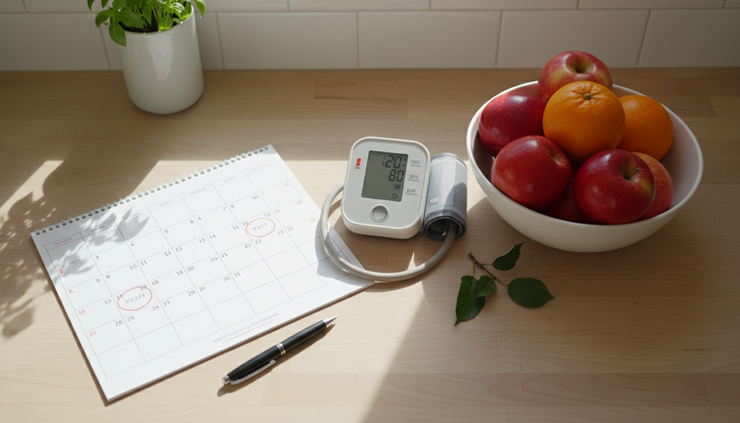
A simple weekly prevention plan
A useful plan should fit on one page. It should support energy, medical follow-up, and long-term risk reduction.
Here is a realistic starting point:
Health area | Weekly target |
Nutrition | Plan three simple dinners with protein, vegetables, and fiber |
Movement | Get 150 minutes of brisk walking or similar activity |
Strength | Do two short full-body sessions |
Sleep | Keep a steady wake time at least five days |
Stress | Schedule two 10-minute recovery breaks |
Monitoring | Check one health marker if recommended, such as blood pressure |
Care | Book overdue screenings, vaccines, dental care, or primary care visits |
Start with the weakest link, not all seven. If sleep is under 6 hours, begin there. If blood pressure is unknown, check it. If most meals are rushed and low in protein, fix breakfast first. If movement is missing, start with walking.
A good prevention plan removes friction. It also allows imperfect weeks. Illness, travel, school events, deadlines, and caregiving happen. The plan should bend without breaking.
The next healthy choice still counts.
The future is built in ordinary moments
Preventive health is not a single appointment or a once-a-year lab result. It is the daily pattern that shapes those results.
Nutrition helps control risk from the inside. Movement protects the heart, brain, muscles, and blood sugar. Sleep restores the body. Stress management lowers strain. Regular monitoring catches changes early, when there are more options.
None of this requires perfection. It requires attention, repetition, and the willingness to act before a problem becomes urgent.
Start with one habit this week. Make it specific. Make it easy to repeat. Then build from there. Your future health is not built all at once. It is built in small choices that you practice often.


Comments